Friday, July 20, 2007

Hardship

The mayor of Warren, Michigan recently complained about the possible influx of Iraqi refugees into his city. He said it would be "a hardship".

In an effort to calm public fears, Michigan Senator Carl Levin said the numbers of refugees sited by the mayor (15,000) were “misleading”. This year, the U.S. can expect to settle only about 2,000 Iraqi refugees, and in total, the State Department has agreed to absorb only 25,000 of the (so far) 2.2 million Iraqi refugees, to be spread around the country.

In case you don't have a calculator handy, 25,000 out of 2.2 million comes to 1%. Is it just me, or does that seem like a shamefully small percentage? After all, this was *our* war. Our president and his pals came up with the idea. Our congress persons voted to authorize it. Indeed most Americans were gung-ho about it in the beginning. Those who urged caution were disparaged as unpatriotic terrorist sympathizers. Five years on, it doesn’t look like we can fix what we broke in Iraq. Most Americans have come to the conclusion that we should cut our losses and hope for the least worst of all the terrible possibilities. That’s a rational decision, but it doesn’t follow that we can then wash our hands of the whole thing and go on with our lives as if nothing happened. We certainly can't wash our hands of the financial cost: we and our children will be paying the $444, 937,600,000 and counting for this war. And we should not wash our hands of the moral costs either.

Actions have consequences. Accepting refugees from the horror that we largely created may be more or less avoidable, but what our moral responsibility? Those of us not in the military have sacrificed next to nothing. We’ve only been asked to be patient and keep shopping! I don’t care to suffer hardship any more than Mr. Mayor and the good folks of Warren, but I’m seriously questioning what right I, or any American, has to be exempt from it in this case. If I really knew what it was like to suffer even a fraction of the hardship that a woman my age in Baghdad is suffering, I’d probably be offering to put her and her family up in my own house! Maybe some hardship for Americans is exactly what justice demands. It’s a bitter thought, but passing off the burden of refugees almost solely onto Iraq’s neighbors while we agree to accept only 1% seems shameful and cowardly.

Tuesday, July 03, 2007

Diversity, Trust, and Religion

I recently became aware of research by Robert Putnam that paints a mixed view of ethnic diversity. Here is an excerpt from the abstract of the study:
In the long run immigration and diversity are likely to have important cultural, economic, fiscal, and developmental benefits. In the short run, however, immigration and ethnic diversity tend to reduce social solidarity and social capital. New evidence from the US suggests that in ethnically diverse neighborhoods residents of all races tend to ‘hunker down’. Trust (even of one's own race) is lower, altruism and community cooperation rarer, friends fewer. In the long run, however, successful immigrant societies have overcome such fragmentation by creating new, cross-cutting forms of social solidarity and more encompassing identities.

Unsurprisingly, this study has been cited by numerous anti-immigration and anti-multiculturalism folks -- usually minus the reference to the possible long term benefits. The come-back from progressives is usually to focus nearly entirely on the long term findings. I think this is equally problematic. Both the short and long term effects must be taken seriously if we care about the quality of our own lives and the lives of our neighbors – wherever they come from.

People who work with diverse populations at schools or in community settings will tend to file this study under the heading “not news”. The darker side of human nature makes diversity difficult. But diversity (and, I dare say, immigration) is here to stay, so what do we do? How do we make the short term problems as “short term” as possible? How do we get over the mistrust and “hunkering down” tendency?

I’m especially interested in thinking about what role religion (or spirituality, if you prefer) can play in the drama. It strikes me that when religion is at it’s worst, it exacerbates the problem – creating enclaves of suspicion and encouraging us to pass judgment on our neighbors. I’m sorry to say that I think this happens more often than not, but that doesn’t mean that secularism is necessarily the better answer. Secularism can just as easily lead to “me first” thinking, and suspicion of differences in manner or culture. No-holds-barred capitalism is thoroughly secular (in spite of the many Religious Right types who embrace it, seemingly contrary to biblical principles), yet it is the major cause of migration between countries, both legally and illegally. Not only are people drawn to western countries to seek opportunity, they are also “pushed” from the other direction by impossible economic situations brought on by a secular “theology” of globalism that elevates profit above any other social, political, or human good.

But what about religion as 17th century Quaker Robert Barclay experienced it?

“For when I came into the silent assemblies of God's people, I felt a secret power among them which touched my heart; and as I gave way unto it, I found the evil weakening in me and the good raised up.”

Religion at it’s best raises up the good in us and weakens the evil. It reminds us that we are all loved by God, all part of the same sacred creation. Even when we can’t manage to feel that way about our fellow human beings, good religion disciplines us to behave as if it were true anyway. (“Love thy enemy” and all that...)

I’m interested in what others think about these topics. Please share!

Wednesday, June 13, 2007

Finished product

Since the jam post was so popular, I thought I'd share some pics of the results!

It took me almost exactly 3 hours to do 4 batches -- less time than I anticipated. I guess after doing this a few times, I'm getting more efficient! I got the kitchen totally prepped before going to get the berries: canner out and filled, counters clear, jars washed, etc. So if you count that part, maybe it would be closer to 4 hours. Still not bad. You'll notice that the fruit floats to the top of the syrup. No biggie -- we just stir it when we open it, but if anyone knows how to avoid this, I'd be interested. Even my grandma didn't know, and she's done her share of jam-making.

A couple of readers asked about cost. I purchased 8 quarts of strawberries (one flat, or about 16 lbs.) for $20. Buying direct from the grower at the farmers' market is definitely the way to go! I already owned the jars and ring parts of the lids, so no additional cost there. The flat part of the lid is not re-usable, so I had to buy those: $1.50. Pectin came to $6.00, and I estimated the cost of the sugar used to be about $0.50. (I used store brand sugar, and only about 3 1/2 cups total.) Grand total cost = $28.00

I processed the equivalent of 26 eight ounce jars. (6 twelve oz. jars and 17 eight oz. jars) That comes out to $1.07 per 8 oz. jar. I *might* be able to buy the very cheapest store brand for less -- I don't know, as I haven't priced them out. But since I would normally be buying brands with low sugar and no artificial colors, it's a decent savings. (That's not even considering the taste factor, which is a biggie.) I save even more when I use them as gifts. A jar of homemade jam and a homemade loaf of bread make a wonderful (and usually highly appreciated) gift for a neighbor or casual friend, even though the total "value" might only be about $2. Saving money isn't the point in that case; what you are really giving is time and care. Nevertheless, it's a welcome by-product when you're on a tight holiday budget.

Can't wait to break one open tomorrow!

Oh, and here's a tip for anyone who decides to try this: consider keeping your jars warm in the oven (set at about 200 degrees) rather than in simmering water on the stove as most recipes instruct you to do. Your stove already has the huge canner going, plus the 6 - 8 quart pot for cooking the jam, plus maybe a tea kettle of hot water to add to the canner as needed. I don't know about your stove, but mine has no room for an additional huge stockpot filled with jars! Putting them in the oven saved hassle and space -- I just took the hot jars out of the oven as I needed them. I kept the lids in a pot of hot water in the oven as well.

Sunday, June 10, 2007

Strawberry Jam

This Wednesday is strawberry jam day at our house. I was informed by one of the farmers at our local farmer's market that he would have strawberries "by the truck load" this week. The kids will be going to a friend's house on Wednesday so that I can get the strawberries and make jam from them on the same day.

You're probably thinking, "Nice, but so what? Lots of people make jam."

The thing is, we haven't had any jam at all for about 2 1/2 months now, so it feels like a treat to us. We are not full-fledged localvores -- I'm not ready to give up bananas, for one thing -- but we're trying to eat that way more frequently, especially with foods that are grown in our area. So in March, when we ran out of the jam I made last summer, Firmin and I agreed that we would simply wait until jam-making fruit was in season again instead of buying jam at the store. We had a plentiful supply of local raw honey to eat on our toast and to be a sweetening addition to a peanut butter sandwich. (No, peanuts are not grown in Michigan, but this isn't really about pure-ism. Read on.) The final deciding factor was the relatively high cost of jams which contain neither high fructose corn syrup nor artificial food coloring. We would wait.

What I've discovered to my own surprise and delight, is that rather than missing the jam (though we have at times), the primary experience has been one of joyful anticipation and gratitude. I'm thankful for these strawberries in a way I never have been before. I'm actually looking forward to the long afternoon of processing and canning the jam. The kids are thrilled at the prospect of an honest to goodness PB & J sandwich! We have stopped taking jam for granted. It's a very small thing really, but small things can teach big lessons.

Next, I'm thinking about apples. Michigan is second only to Washington state in apple production, and Michigan apples are available year-round. For organic apples, however, the Michigan supply is about dried up. My choice now is pretty much Chilean organic apples or Michigan conventionally grown apples. Hmmm... It won't be long before the early varieties are ready -- mid-August I think. Can we wait? If we do, how good will that first bite of a crisp fresh-from-the-tree apple taste?

This waiting for the season is quickly becoming a lost experience. Previous generations were forced to wait. Waiting today requires discipline, which is much tougher and sometimes hard to justify. I can testify from personal experience that it can feel downright silly to walk by food that you want when it's right there in front of you, especially if your cart already contains other items that are not local or in season. (I buy broccoli year-round, for instance, and plan continue to do so -- it's one of the few green veggies the whole family likes!) Yet walk right by I do, and with increasing frequency. There are plenty of good reasons to eat locally and in season whenever possible, but one that's often overlooked is the pure pleasure of delayed gratification. Still skeptical? Just ask your grandma how good blueberries used to taste in July when she was a girl. Note her big smile...

Wednesday, June 06, 2007

The Conservative in Me

Every once in a while I pick up a book that resonates so strongly that it makes me comment out loud -- "Yes!" "That's exactly right" "Absolutely!" -- while I am reading it. (I can only hope to be either alone or amongst understanding family members when it happens.) I just finished such a book. Given that it's written by a conservative journalist who has worked for the National Review, the book has had a particularly profound effect on me. It challenged some of my assumptions about conservatives, caused me to reconsider how best to describe myself politically, and gave me hope for some common ground between at least some liberals and conservatives in this grossly polarized era. It also spawned about 20 blog post ideas, lol! I'll dole out a few of them here and there over the next couple of months.

I must give the full title, long as it is, so that you can understand why I picked it up in the first place. It is Crunchy Cons: How Birkenstocked Burkeans, gun loving organic gardeners, evangelical free-range farmers, hip homeschooling mamas, right-wing nature lovers, and their diverse tribe of countercultural conservatives plan to save America (or at least the Republican Party) by Rod Dreher. Those of you who know me know that I wear Birkenstocks, garden organically, eat locally-raised, free-range meat, homeschool my kids, and love nature. However, I have not read Burke, do not love guns, am religious but not evangelical, am sadly lacking much "hip" other than the ones above my thighs, am decidedly NOT right-wing, and can count on one hand the number of Republicans I've voted for. I just *had* to read this book!

The most important thing Crunchy Cons did for me was to smash some preconceptions I had about conservatives, and make me re-consider my own self-identification as a liberal. Dreher is the kind of Republican that I didn't know existed: one who would willingly restrain the excesses of free-market capitalism in the name of preserving authentic communities, strengthening families, and protecting the environment. (That I didn't know of the existence of folks like him is in itself is an indictment of our over-polarized political environment. Where are their voices in the mainstream media and the Republican party?) He believes passionately that our current state of affairs -- with ever-increasing consumption of material goods and unfettered pursuit of personal pleasure and gain -- is not only spiritually culturally impoverishing, but also economically unsustainable. I have felt this for a long time now, and Dreher captures how discouraging and lonely such a counter-cultural stance can be at times. Yet he also captures the joy and fulfillment that come from living according to one's deepest held beliefs.

I came to see that my core values -- which mesh pretty well with Dreher's -- really *are* best described as "conservative". I want to conserve values and ways of life that are rapidly disappearing: interdependent communities, strong family bonds, unstructured leisure time (and innocence) for kids, "real" food grown or raised the way nature/God intended, local economies, human scale development, the wise use and preservation of natural spaces, and more. Dreher is perplexed that some of the political policies intended to further these kinds of goals have become nearly the sole province of Democrats and are thus now considered "liberal" issues. Because of that, I think Dreher's sense of alienation from the Right is stronger than my sense of standing on the outskirts of the Left. (Check out the Crunchy Con manifesto. I count 7 out of 10 points that I definitely agree with and at least 2 that I mostly agree with. I know quite a few of my crunchy liberal friends that would agree with many of the points as well. It's easy to see why poor Rod gets blasted by many of his fellow Republicans. Kudos to him for having the courage to keep speaking out!) Finding so much in common with a self-described conservative made me more keenly aware of the ways in which I am different from many mainstream liberals, particularly in the areas of education, media consumption, and consumerism. (There being really no difference in consumerism between mainstream liberals and conservatives. Shopping is fast becoming the national pastime.)

Before reading this book, if the only thing I knew about Rod Dreher was that he voted Republican and wrote for the National Review, my initial impression would have been of a no-holds-barred capitalist who wanted to return to the oppressive-to-women-and-minorities 1950's. I know that's a stereotype, but I must admit that it's exactly what springs to mind when I don't know anything else about a person besides their conservatism. So what do conservatives think when I describe myself as a liberal? Someone who would happily regulate every aspect of life except sex and the media? Perhaps! Maybe nuance, though awkward and time-consuming, is called for if there is to be a meaningful movement of all of us crunchies (Left and Right) to "save America". I don't care as much about the Republican party. ;o)

Thursday, May 17, 2007

Fast Math

My friend and fellow blogger Alissa has a son Brianna's age who is going through "quarterly assessment" testing at his school. One of the areas of assessment is math. Her brief comments about this got me thinking back to math tests of my own childhood, how I'm approaching math with Brianna, and how I might approach it with Alexander. I don't blog much about our homeschooling specifics, but I find this topic worth exploring a little bit.

Thankfully, I attended school before the current obsession with standardized testing and constant assessment. I took state standardized tests in 4th, 7th, and 10th grades, but the teachers didn't make a big deal out of them beyond making sure we knew how to properly fill in the bubbles. (Bubble tests were rare indeed!) The first tests that really felt "high stakes" to me were the tests I took for college entrance -- the ACT, SAT, and AP exams. By then I was an older teen and able to handle the pressure.

Nevertheless, my 2nd grade teacher, Mrs. Frank, decided to introduce some "high stakes" testing of her own. Every week we had "time tests" in math. These consisted of a strip of about 25 math problems that we were to complete as fast as possible. The times of each student -- adjusted somehow for accuracy -- were posted for all to see. I believe they were even charted on a graph. I was one of those kids who was very accurate if given adequate time, but I could be slow to come to an answer. Time pressure only befuddled my brain, so my times were always near the bottom of the class even though I was capable of doing the problems presented. Needless to say, I exited 2nd grade with the (false) impression that I was bad at math. This incorrect belief lasted for years and negatively affected my math education.

So you can imagine my conflicted feelings when Brianna's math curriculum suggested "practice sheets" -- strips of about 25 math problems that the child should do repeatedly with a goal of finishing accurately in about 1 minute. Ack - Time Tests! Understand, they only suggest this *well* after the child has become proficient at solving addition problems mentally using a number of strategies not to include counting. The sole purpose of the practice sheets are to increase speed. I can't argue with the practicality of this. Brianna is highly proficient at maniuplating numbers mentally to solve problems, but when adding 3 digit numbers, all that manipulation takes time. Once you know what you're doing, it's much more convenient to have the basic facts committed to memory.

Uncomfortable with the timing aspect but understanding the rational, I decided to give Brianna the choice. She chose to time herself, and with her father's stopwatch, no less! The timing does not seem to add to her anxiety or make solving the problems more difficult, as it did for me. I suspect it's because she's only competing with herself. She has no idea how she would measure up against other 1st graders, nor does it occur to her to wonder about that. She's well above the 1 minute goal time -- more like 2:40, but I think that's due more to her slowness in writing than to not knowing the answers. When she dictates the answers to me, she's around 1 1/2 minutes, depending on the difficulty of the problems. In any case, it doesn't seem to phase her. I make sure to note her 100% accuracy, and assure her that accuracy is more important than speed. I don't recall Mrs. Frank every praising my accuracy. (She may have done, but so much emphasis was on speed that if she did, it didn't make an impression.)

Alexander's preschool teacher commented during our conference today about how good he was at math. I was a bit surprised to hear this -- not because I think he's slow, but because at home he does very little math talk or play that I see. (Unless I count being able to look at a Lego diagram and copy it fairly well, which I *should*!) Brianna did much more conventional math play at his age, and would ask to do math lessons for fun. Alexander asked for lessons a couple of times, then stopped. I think the difference isn't in math ability, but in how the children approach learning. Brianna's learning is so easy for me to see. She goes about it quite conventionally, as I did, so I recognize it. When we do math lessons together 3 or 4 times a week, I see the progress and know exactly what she can and cannot do. Alexander seems to draw from more diverse sources and then manifest his knowledge in ways that I don't always recognize immediately. (Like the Legos.) Homeschooling is going to be more challenging with him simply because he and I do not share a common learning style. Nevertheless, I think it will be fun and nearly as educational for me as it will be for him!

Saturday, May 05, 2007

Real Moms Get Used to Gross

It starts with that first meconium-filled diaper. Maybe it's the first "poo" diaper you've ever changed, or perhaps you've confronted the messy diapers of a niece or nephew, or a baby sitting charge. In any case, you may notice -- or you may not, in your post-birth fugue -- that it's not as distasteful to deal with as you would have thought; not quite as nose-wrinkling as the messes of those other babies that were not yours. Good thing, because that little bit of mucky stuff is nothing compared to what awaits you: diaper blowouts that reach from your baby's hair to her socks, smelly "big kid" poos smashed into your toddler's training pants, preschooler vomit all over your preschooler, his bed, you, and your bed at 3 AM, and cold after cold bringing snot, snot, and more snot for you to wipe from nose, face, hands, shirt, nearby surfaces, and yourself.

Amazingly, moms are universally able to cope with all this and more (bloody gashes requiring stitches, anyone?) without tossing their cookies or even feeling queasy most of the time. (Unless they are in their first trimester of a pregnancy, than all bets are off!) Sure, we may wrinkle our noses, or let slip and "Oh yuck!" now and then, but we quickly do what needs to be done, wash our hands with plenty of soap, then get back to making dinner.

I thought about this the other night after I dug a large booger from Alexander's nose with a Q-Tip. It was bothering him to the point of not being able to sleep, and no amount of nose-blowing would dislodge it. It was indeed a pretty gross procedure, though not the grossest thing I've done for my kids by a long shot. Nevertheless, for just a moment, I lost my "mom" perspective and allowed myself to dwell on the "ick" factor of what I had just done. I let out a cough which ended in a bit of a gag. Then I got hold of myself and went on with life like the real mom that I am.

Note: This post is in response to a Real Moms tag from my friend Jennifer. It looks like it started as a contest, which anyone can still enter up until May 11 if they follow all the rules in the link above. However, several bloggers before me have deviated from the rules, and I'm not jumping through every hoop either. I love it as simply a tag theme that threads together many mom bloggers who may not even know one another. I'm tagging Ma and Jenny!

The original rules of the Real Mom challenge say to include a picture. (See note and link above.) I debated taking a photo of Alexander's mostly-clean nostrils, but he's asleep right now. Real moms do NOT risk waking a preschooler at 11 pm with a camera flash. So just for fun, I looked through my digital photo files and found a picture of a not-so-gross mess that I once had to clean up. :o)

Sunday, April 29, 2007

"Sunflowers"

Alexander has been calling dandelions "sunflowers" this spring. I've corrected him a couple of times, but I'm going to stop. After the spring we've had, I think he's more right than wrong. What better sign of the return of the summer sun than the dandelion? This afternoon, Firmin will mow the yard for the first time this year. Xander was distraught about it until Firmin promised to leave a little patch of "sunflowers" unmowed.

Update on the seedlings


Six days after replanting, every single seedling looks healthy and strong! What a great kid I've got!

Tuesday, April 24, 2007

Brianna Saves the Seedlings

Yesterday at about noon, a small disaster struck. The wind was beginning to gust quite strongly, as a spring storm seemed to be blowing in. My mini-greenhouse on the porch had been weighted down on the bottom, but apparently not enough. It blew over with a crash, sending my heart crashing with it. Buried in piles of dirt and overturned flats were 2 - 3 week old tomato, broccoli and parsley seedlings -- all of the plants of those varieties that I had hoped to cultivate this summer. To complicate matters, I had not used flats with individual growing cells. All of the seedlings were growing side by side in one non-divided tray of soil.

I surveyed the mess with dismay. The greenhouse had fallen onto it's front, with the zip-up opening against the floor. Potting soil was everywhere and there was no way to limit the further damage that would be done when the greenhouse was righted again. My husband tried to be optimistic. "They can be replanted. They're all there." I was not so easily comforted. I could only see the trauma of my poor little baby plants, and think about the wasted weeks of germination and growth that must now begin again, delaying the harvest beyond what I had hoped. I mentally checked my seed stock and wondered if I had enough left over. I thought with a hint of bitterness of how much money would be wasted if I needed to buy all my seedlings from someone else rather than using my own (already paid for) seed. "They *can't* be replanted!" I snapped. "This is too much trauma for them -- they won't recover!" The thought of even trying seemed too much. My day was already overloaded with tasks that couldn't wait.

Brianna came out to see what had happened. She had helped plant and care for the seedlings. She was concerned, but calm. She stepped in close to survey the damage. "Mommy, I think we could save most of them. Their roots are still mostly in the soil, so we could put them in those paper pots we made. If we do it right now, they might live!" A few weeks earlier, Brianna and a friend had made seedling pots out of newspaper. I later decided to use the undivided flats instead, but I had not yet disposed of the pots, thinking I might yet find a use for them. Shooting down my husband's optimism had been easy (sorry Sweetie!) but with my child, it was different. She was already taking charge of the situation -- running to get the pots, triaging the seedlings. How could I discourage such initiative? And why should I? Her confidence made me take another, more objective look at the situation. I saw that she might be right.

My husband and Alexander left for preschool, but Brianna and I threw ourselves into the rescue mission. In the end, we re-potted 27 seedlings. We saved many of the tomatoes, a decent fraction of the broccoli, and none of the parsley, which had only *just* germinated and were too tiny to be saved. Time will tell how many of the 27 survive, but as of last night, they were looking quite well. It was a highly satisfying endeavor for us, and a bonding experience as well. I owe Brianna a debt of gratitude for reminding me that things are seldom as bad as they seem in the moments immediately following a mishap. Her sense of optimism about saving the seedlings may have been child-like, but it was not" childish". When it was all over and we were cleaning the dirt from our fingernails, I thanked her. She just gave a small smile, but I could tell she was pleased and proud of herself. I hope she remembers that feeling for a long time. I hope it helps her persevere in future situations. And when she forgets, I hope she has a child in her life who can help her remember.

Thursday, April 19, 2007

Two Posts: A Problem and Safety for Homeschoolers

Today, here and there across the country, high schools and colleges were closed or on lockdown due to threats of Virgina Tech-style massacres. I don't know how many, but I heard about four on the news today, and a very quick Google search turned up six more. I'm willing to bet there were quite a few that I didn't find or hear of. How credible those threats are is almost beside the point. The fact remains that a disturbing number of people in our society are ill and/or angry enough to entertain the idea of mass murder. I think we need to focus less on what is wrong with the individuals who commit such acts and focus more on what is going on in our culture. We clearly have a problem.

Possible areas of investigation:
*Mental health treatment and lack thereof
*Bullying, and I don't mean just among school children
*Our consistent appetite for entertainment that appeals to our basest instincts, including graphic and incessant "news" coverage that claims to go "inside the mind of a killer".
*The availability of guns and ammunition at family retail stores with minimal (and apparently faulty) background checks. (The same stores where we can also buy toys and clothes for our children made by other children in sweatshops. Another blog entry, but perhaps not so unrelated.)

I'm sure there are more, but that should be enough to get us started.

******

Whenever school shootings hit the news, homeschoolers are abuzz with relief their kids are safe at home. (I even heard some in this most recent case, which is odd since it happened at a college, and most homeschoolers do aspire to attend college. But I digress...) I have some thoughts about this:

1) It's nice to feel that one's children are safe. I must admit that hearing of all the lockdowns today made me thankful that my kids and I don't have to go through that stress. My children are less likely than most to be murdered in a school shooting, and I'm glad.

2) The idea that homeschooled kids are safer from death is an illusion. (Though a nice one to entertain, as outlined above.) I don't think anyone has gathered the macabre statistics, but I would venture to guess that homeschooling actually puts kids at a greater overall risk for death. Think about it: accidents are the leading cause of death among children in the U.S. -- car accidents and accidents in the home. Where do my children spend 90% of their waking hours? At home or in the car! Statistically, children are relatively safe from death while at school and even when on a schoolbus, so the numbers would seem to favor children who spend 30 - 35 hours a week in school.

3) I don't care. Whether in school or at home, my children are much more likely than not to live to adulthood. Taking that as a given, I believe homeschooling provides them with the best environment in which to learn joyfully and freely. I also believe that homeschooling provides my kids the emotional safety they need to develop a strong sense of self to carry with them into the world. With a healthy self-image and sense of identity, they can interact with diverse people (even bullies if need be), face tough challenges, and make good decisions. Will they do these things perfectly and be 100% happy and successful? If only! But I believe they will be as well equipped as they can be.

So for me, the question of safety involves safeguarding my kids' sense of curiosity, wonder and love of learning. It also includes giving them a safe space to be fully themselves, whether they be with family, with friends, or off alone somewhere. Homeschooling allows me to facilitate a balance of each, according to each child's needs for social interaction and "alone time". It also allows me to protect them from some of the most toxic aspects of our culture for a while longer than I would be able to otherwise.

Physical safety? Well, that's what seat belts, bike helmets, eyes in the back of my head, prayer and luck are for. And if, God forbid, the unthinkable were to occur, I'd be grateful to have had the extra hours of learning, love and togetherness that homeschooling gave us.

Monday, April 09, 2007

Scheduling

I am a Flylady failure. I tried her system on two seperate occassions, and flunked out both times. Someone recommended the Home Management Binder system (*see note), at the heart of which are detailed schedules for each day. Desperate for some order in my life, I gave it a try. I always said I was not a "schedule" type of person. Apparently it's true, and that's exactly why I *need* a schedule to get anything done! I waste inordinate amounts of time when left to my own devices and then wonder why I don't have time for anything. With the schedules, I actually have *more* guilt-free free time than I did when I was always thinking, "I *should* be doing something else right now." I had fallen out of the schedule habit for several months and the chaos crept back slowly but surely. I'm back on track now and glad to be.

Below are some pictures of my binder. In addition to the schedule pages there are sections with frequently used recipes, to-do lists, weekly housekeeping tasks, etc. It really is nice to have everything in one place. Most pages are cased in page protectors so I can make notes on them with dry erase markers. The page protectors also allow me to pull the recipe out and use it in the kitchen without worrying about splatters and such. On the cover are "Guidelines for our Home" which include ideals we would like to live by to make our home a place of simplicity, love and warmth.


Here is today's schedule, for example. Sections in blue are items which include the kids. This makes it easy for Brianna to check the schedule to see what's up for them that day:

MONDAY

7:00 – 7:30 get up, play game with Alexander (and B. if up)
7:30 – 8:00 Make bread dough
8:00 – 8:45 Breakfast – clean up after
8:45 – 9:30 Shower and dress, brush teeth, etc.
9:30 – 10:00 Morning Meeting; Kids pick daily chores to be done before lunch

(Check bread)
10:00 – 10:30 Mommy’s quiet time
(Check bread if necessary)
10:30 – 11:30 Housework time
11:30 – 12:00 Fix lunch & tend to bread (1/2 hour warning on chores if needed)
12:00 – 12:30 Lunch
12:30 Xander leaves for school
12:30 – 3:00 Homeschool time with Brianna (plus library or short errands)
3:00 Pick up Xander

4:00 – 5:00 Make simple dinner and clean kitchen
5:00 – 5:30 Eat dinner

5:30 – 7:15 Brianna’s swimming class
7:30 Bedtime for kids (Poppy?)

8:00 – 10:00 TV time
10:00 Evening Routine
10:30 Get ready for bed
11:00 In bed

You'll notice the lack of computer time on today's schedule. According to the schedule, I should be making a quick dinner right now, but Brianna's swimming class was cancelled, so I have some unexpected free time.

The kids like it too, because they know what to expect. "Morning meeting" is something new that we are trying out, and I tried very hard to keep it at 9:30 every day. (I think there was only one day when it was impossible.) Most days I have exercise scheduled in, which seems to be the only way I can manage to get to it.

Just don't ask me how I'm going to manage this in the fall with a newborn, lol! I may have to take a break for another few months or longer. ;o)

*NOTE* I won't link to the site I got the binder idea from because the basic binder and mother's schedule system are the only parts I can recommend. The woman who runs the site also schedules her children's every move -- down to when it is child X's turn to sit on the sofa and read (Yikes!) -- and believes in training her children like dogs to obey the parent's every command just as she apparently obeys her husband's every command. (I need a barf icon here!) I simply can't in good conscience direct any traffic her way. If anyone wants to know more about the pearls I picked out of that mud, I'd be happy to share via email.

Tuesday, April 03, 2007

Quickening

Sunday evening, Alexander needed me to sit in his room with him while he fell asleep. He's going through a phase of fear of being alone, so we find ourselves doing this often. With one of us there, he generally falls asleep quickly.

As I sat reading quietly on Sunday in Alexander's room I felt the first unmistakable stirrings of the babe within. I recognized it immediately, even though it has been at least 5 years since I last felt those first flutters of movement. Alexander was asleep by this time, but I remained for a few minutes more, cherishing the soft gentle nudges while they lasted. Historically, this was considered a sacred moment -- the moment the fetus became a person. In spite of all of our knowledge of fetal development, it still feels sacred and significant for me, as it does for most moms, I think.

Thursday, March 22, 2007

Casualty

This is what happens to a Slinky when two children want it and both refuse to let go. Of course it was ruined for good and had to be thrown away. I tried to make it a teachable moment for my children. Without compromise, we often end up in a situation where both parties are unhappy. Had one child agreed to have a turn after the other, the slinky would still be intact. But no -- the principles of Who Had It First vs. Who Owns It vs. Who Had Been *Planning* to Play With It First vs. Who Had the Better Idea for What to Do With It seemed too important when the slinky still had value.

It occurs to me that children aren't the only ones who need to learn this lesson. We all sometimes make matters worse by focusing on ego-driven factors. Unfortunately, we adults sometimes break hearts and lives instead of toys. And sometimes we even start wars that break a heck of a lot more than we can ever repair or replace.

Monday, March 12, 2007

Where did my baby go?


She's already tall and smart and well spoken. Now that she's loosing all these baby teeth, she's looking even older! Luckily, she still loves pink and goofy jokes and cares not one whit for fashion. She may not be a baby anymore, but she's still my little girl!

Tuesday, March 06, 2007

Cultural Memory

So I have some cream sitting in my fridge, and I don't dare disturb it. You see, it's not cream that came nicely prepackaged in a little cardboard carton from a diary company 3 states away. It's cream that I skimmed myself from 3 half gallon glass jars of milk from an organic dairy farm near my home. Cool, huh? But here's the problem: the cultural memory of how to properly collect the cream from milk has been lost somewhere in the last century and I'm stuck! When I initially skimmed the cream, I knew I got a bit of the milk mixed in. (I was just winging it after all and didn't know how to avoid that.) So I put a lid on the glass bowl of freshly skimmed cream and set it in the fridge to let the milk settle out again. This it has done nicely -- there is about a half inch of milk settled below the 3 inches or so of cream.

Now what? How do I get all the cream off without disturbing that half inch of milk? Did women used to use this 2 step method? Did they have special equipment? Was there a "trick"? I will probably find some instructions online, but how much nicer and more personal it would be to have someone show me!

This experience got me thinking of all of the other kinds of cultural memories that are casualties of the rapid progress of the last century. The way we live and relate to one another is so different now than it was 100 years ago. We can barely claim to have a common cultural experience with our own recent ancestors.

There are lots of things we have gained and many reasons *not* to want to go back, of course. My marriage would have been illegal 100 years ago, and my children outcasts. I make my own bread, but I knead it with the dough blade in my food processor -- a time saver that makes all the difference. As a woman, I have choices and options about work and family that I cherish and that I want to maintain for my daughter.

Nevertheless, I feel a certain sadness for what we have lost. I sometimes envy those who live as their ancestors have lived for generations. It's hard to put my finger on why without sounding hopelessly nostalgic or naive about the past. It's not that I want to live just like my great-great-grandmothers did. It's more of a sense of spiritual loss that comes from losing touch with what was steadfast about life and what was known without knowing. The details are much less important.

Still, I would like to know how to skim cream properly...

Saturday, February 17, 2007

Fears of Impending Motherhood

I'm expecting my third baby in September. It wasn't a total surprise, just a small one, but it's still hard to imagine how our lives will change with this new baby. I find that I'm more sober this time around. When Brianna was born, I knew life would change, but I had no earthly idea how everything was going to change -- even the way I related to the rest of the world. I had barely had time to absorb the realities of motherhood when Alexander was on his way. Brianna had been an "easy" baby, so again, I had no clue what was in store for me. I was unprepared for a baby who hated to sleep, refused any and all pacifiers or lovies, and needed nearly constant skin to skin touch. By the time he was 2, Firmin and I were sure we were done having children. He had the most delightful and entertaining personality of anyone in the family (still does), but he exhausted us. Thus, both my pregnancies were spent in a kind of naive bliss; the first a product of total ignorance, the second a product of false confidence. This time, my happiness is more tempered. I trust that this baby will be a bigger blessing to our family than I can now imagine, but I also know that every change brings challenges and even some loss.

I'm hopeful about many aspects -- having a baby with 5 and 7 year old siblings will be dramatically different from the last time, when we had a 24 month old toddler. Brianna and Alexander can put on their own clothes, coats, and shoes. They can get their own breakfast and drinks of water. They can buckle themselves into the car on their own. They can do simple housekeeping tasks without much supervision. Both will be able to hold and play with the baby and mind it for short periods while I shower or make lunch. Brianna will be able to pick the baby up and carry it once it can hold it's head steady. They are both eager to be helpful and loving, and I know they will be.

In other areas, I'm preparing for changes that will be inevitable. As Brianna and Alexander have become more independent, I've created routines that take up more time or require a more stringent schedule than a baby will allow. Baking and cooking mostly from scratch, tending a medium size vegetable garden and preserving the produce from it, knitting, reading for pleasure, going to museums on the spur of the moment -- all will become more complicated, and many will have to be put on the back burner for a year or more. I know these are small things, to be postponed only for a time. It's just that I feel I've only recently reached this point of contentment and confidence as a mother, and soon things are going to be thrown up in the air again. It will be a spiritual exercise in patience and acceptance of one's season of life. How we will manage our homeschooling is another open question. I'm the kind of person who likes to know how things will go in advance so I can plan, yet there is just no way to know how this baby will affect our routine. We will simply have to wait and see and work with the baby's rhythms.

This time around I know something I didn't fully know when I was expecting my last two babies. I know that by welcoming another child, I'm signing on for more joy, laughter, and love; for more growth, challenge, and uncertainty; and yes, even for more pain, tears, and difficulty. One thing I've learned in nearly 7 years of parenting is that it's a package deal. You take the bitter with the sweet, the self-sacrifice with the gratification, the fear of the unknown with the thrill of moving forward in love.

Come September Baby, I'll welcome you with arms, heart and eyes open wide.

Sunday, January 14, 2007

Some Pictures


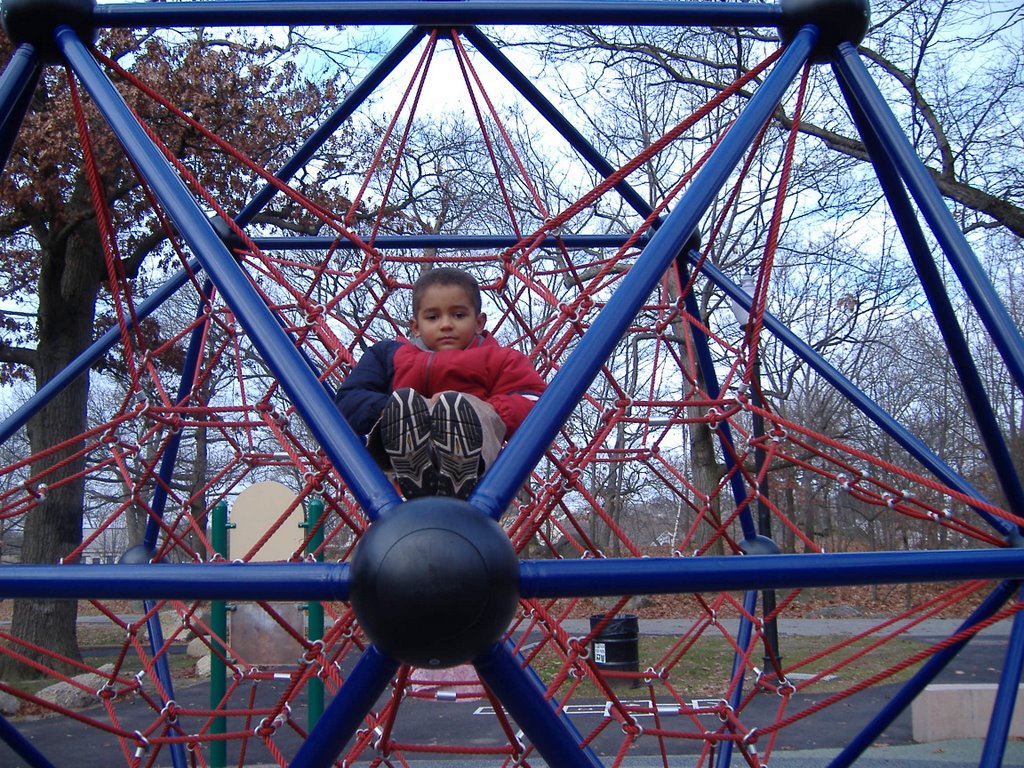
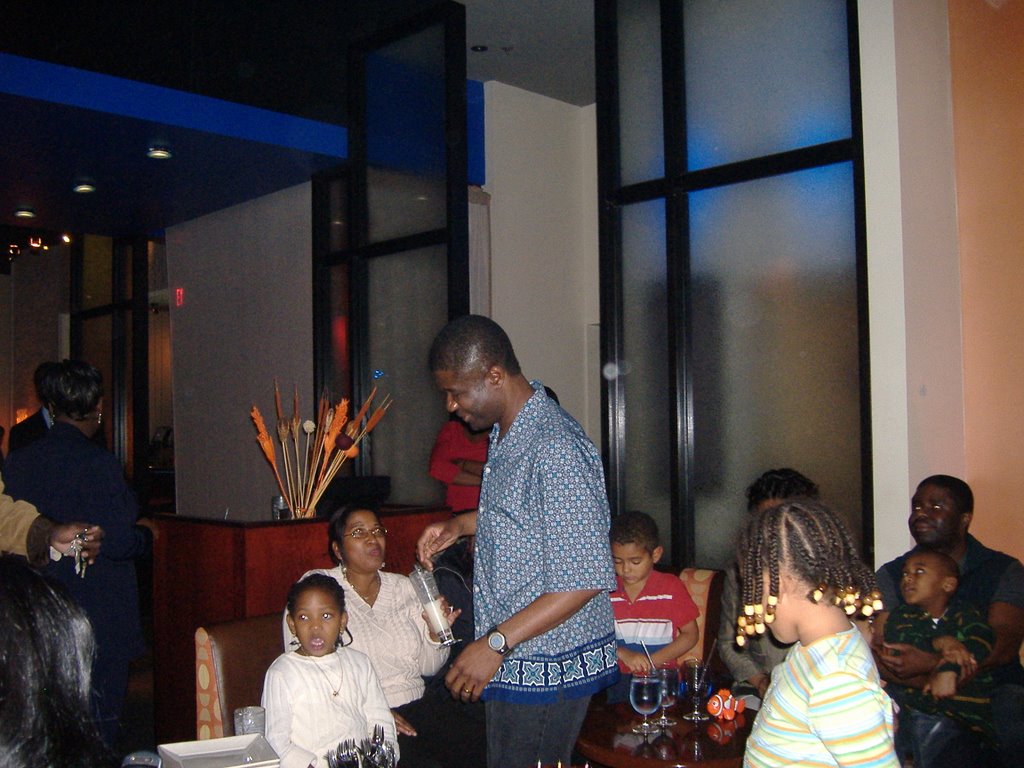
It's late on a Sunday night, but I didn't want to wait any longer to update this blog! It got neglected in the holiday glow, and I just haven't gotten back to it. Here are some pictures from our trip to Boston to visit Firmin's family over Thanksgiving. The other two little girls are Firmin's sister's children.


This rope climing structure is so cool! I wish they had them around here.


Poppy's birthday party at Uncle C's new restaurant. That's Brianna in the foreground and Alexander in the red and white shirt in the back.


Christmas morning! This one's not from Boston, but I realized I haven't had a good picture of Brianna up in quite a while!

Monday, December 11, 2006

Santa, Poverty, Charity, Jesus, Peace: Some Thoughts for Christmas

Well, it's official -- Alexander does not believe in Santa Claus. He asked me this morning if there was "really a real person" named Santa Claus. I asked him what he thought about that. He said no, he didn't think there really was. My Santa policy has always been not to actively promote belief, but not to actively discourage it either. I believe Brianna was also 4 when she came to the conclusion that Santa wasn't a literal person.

There followed a rather extended and wonderful conversation -- in which we were joined by Brianna -- about the meaning of Christmas, the giving of gifts to those we love, baby Jesus, the story of the real St. Nicholas and care for the poor. We all agreed that it was fun to pretend about Santa and that we would continue to do so as much as they wanted to. Toward the end of the conversation, I asked Alexander if he wished there really were a Santa. (I'm confident in my handling of this topic, but there's always the possibility that my children won't agree!) He said "no" so emphatically that I asked why. Apparently, the idea of an all-seeing, all-knowing large bearded man in a red suit invading one's home in the middle of the night can be just a teensy bit scary to a preschooler, even if he *is* bringing presents! LOL!
___________

The topic of care for the poor came up in our conversation because Brianna's First Day school class has sponsored a family struggling with poverty for Christmas. They are providing clothing, toys and food for a mother and her three children. It was the First Day school children's idea, which came as an outgrowth of their explorations of the Quaker peace testimony. They have been actively involved in raising money, shopping for gifts, etc., and the Meeting as a whole has caught the spirit as well. In addition to supporting the children's fund raising efforts, several adult members of meeting have made direct donations, while the Peace and Social Justice committee has allocated some money from their budget for the project.

I have conflicting feelings about this situation. The fact is, that without the help of the Salvation Army (or some other such organization) and/or caring people who respond to the need (like the First Day school class), there would be no merry Christmas for this family. The happy stories of Santa Claus would ring hollow for the three children. One of the First Day school teachers has been the primary contact with the family and has already been to the their house to deliver winter coats and other clothing items that just couldn't wait until late December. She confirmed that they have almost nothing in spite of the mother's employment (probably at a minimum wage job.) Confronting this kind of poverty in our wealthy country always makes me a bit angry. I love that Quaker children and the Salvation Army are lending a helping hand, but a working parent in the United States should be able to buy her children a couple of Christmas gifts, not to mention winter coats and good food! The current system being what it is however, I'm happy that our children want to help and that the mother was willing to ask for help. I wish she could see the innocent enthusiasm of the Quaker children as they undertake this project. There is little or no pity or condescension, only joy at being able to do something helpful in the "real world". I think children so often feel helpless or vulnerable, and they are so often the recipients of help from others, that they don't see these situations as out of the ordinary or shameful. I'm overjoyed that the children in the sponsored family will have many of the gifts they asked for, new clothes for school, and some extra food.

I hope the sponsored family is touched in a positive way by this experience. Charity can be tricky in our society, so there's no guarantee of that, but I'm optimistic. I know the Quaker children are learning a most vital life lesson: We can't leave it to Santa or even to God to care for the physical needs of those around us. We are God's agents in the world -- the hands and feet of the Divine Spirit. (Santa's elves, if you want to be secular about it.) Our good gifts come from those who love us if we are lucky, or from those who care about our welfare generally if we are slightly less lucky.

A larger lesson -- one the 6 - 8 year olds aren't fully ready for yet -- is a harder one. Jesus's birth was hailed with prophesies of "Peace on Earth". If we really want to see that ideal come true (be it physcially or spiritually), it's going to take more than pizza sales by Quaker kids and Salvation Army bell ringers. It's going to take a world where poverty is much more rare, and love of neighbor much more common. I doubt Jesus would care one whit about how, or even whether, we celebrate his birth. Imagine if we (as a society as well as individuals) took even half the collective time, energy, and economic power we spend on Christmas and put it into practicing the lessons Jesus taught as a grown-up: "Do unto others as you would have done to you", "Love your neighbor as yourself", "Turn the other cheek", "Love your enemies", etc., etc. We just might get closer to actual Peace on Earth than we ever thought possible. In the mean time, I wish everyone reading this peace in your hearts and homes this Christmas and always.


Sunday, December 03, 2006

Best Buddies (or, My New Favorite Snapshot)

Alexander has his first best friend. Since I never had any brothers, I always wondered what little boys did when they were one-on-one with a best buddy. I'm still not sure, but it looks mighty important.